
Six Sigma Yellow Belt Training   73-slide PPT PowerPoint presentation slide deck (PPTX)
$29.99

Six Sigma Yellow Belt Training (73-slide PPT PowerPoint presentation slide deck (PPTX)) Preview Image
Log in to unlock full preview.
Six Sigma Yellow Belt Training (73-slide PPT PowerPoint presentation slide deck (PPTX)) Preview Image
Arrow   Click main image to view in full screen.

Six Sigma Yellow Belt Training (PowerPoint PPTX Slide Deck)

PowerPoint (PPTX) 73 Slides

Top 500 Best Practice $29.99

Add to Cart


Immediate download
Fully editable PowerPoint
Free lifetime updates

BENEFITS OF THIS POWERPOINT DOCUMENT

  1. Training to see a broader picture and higher understanding of daily tasks that convert into enhanced quality, decreased waste, and better cycle times.
  2. Yellow Belts can become future quality leaders within the organization.

LEAN SIX SIGMA YELLOW BELT PPT DESCRIPTION

Six Sigma Yellow Belt Training material PPT: Learn key concepts, project examples, and certification prep. Get ready with expert Six Sigma Yellow Belt slides. Six Sigma Yellow Belt Training is a 73-slide PPT PowerPoint presentation slide deck (PPTX) available for immediate download upon purchase.

Through this Six Sigma Yellow Belt training program, students can develop a more profound Lean Management, Six Sigma, and Process Management.
Training to see a broader picture and higher understanding of daily tasks that convert into enhanced quality, decreased waste, and better cycle times.

Objective of the Yellow Belt training is to give students the necessary tools required in order to become a valuable player within their organization's larger goals and objectives.

This presentation covers the following topics:

•  Basic Understanding of Lean Concepts
•  Understanding and Defining Values
•  The Seven Wastes of Lean
•  Dimensions of Time in Lean
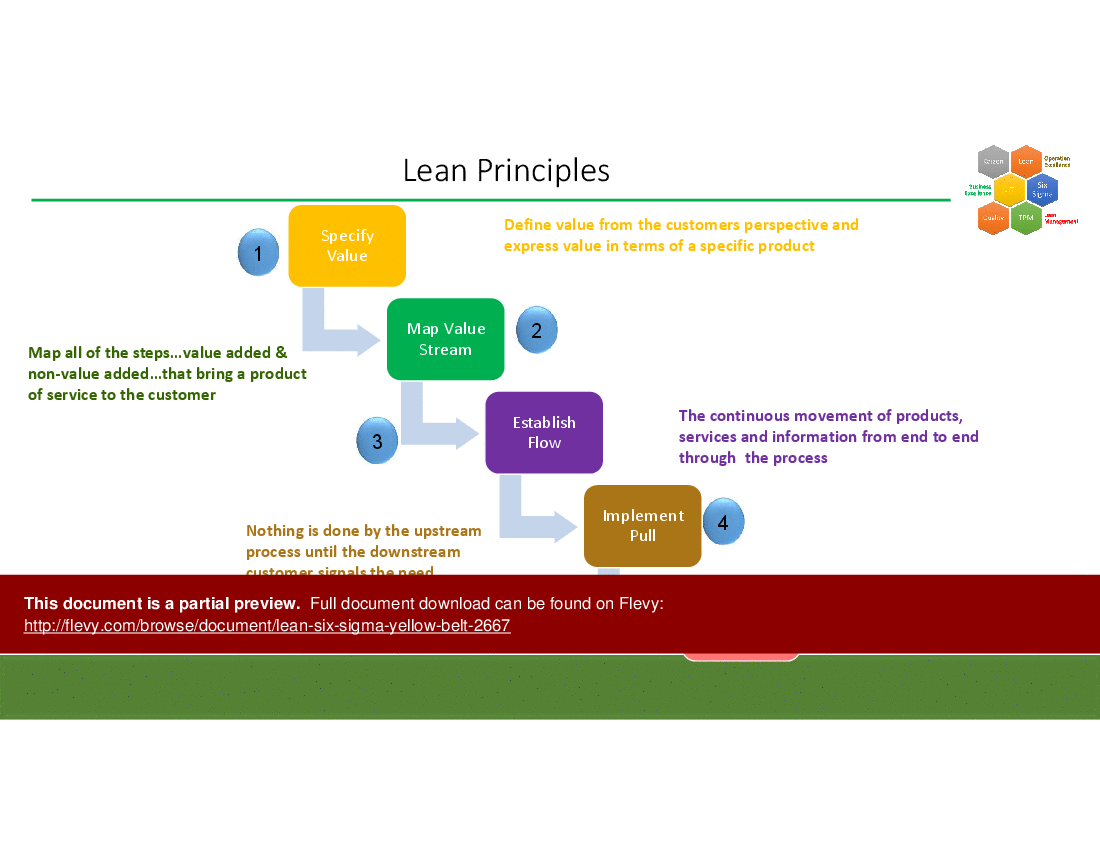
•  Lean Principles
•  Basic Statistics – Types of Data
•  Measure of Central Tendency
•  Measures of Variation
•  What is Six Sigma
•  Data-driven Decisions
•  Six Sigma – The DMAIC Way
•  Define
•  Measure
•  Analyse
•  Improve
•  Control

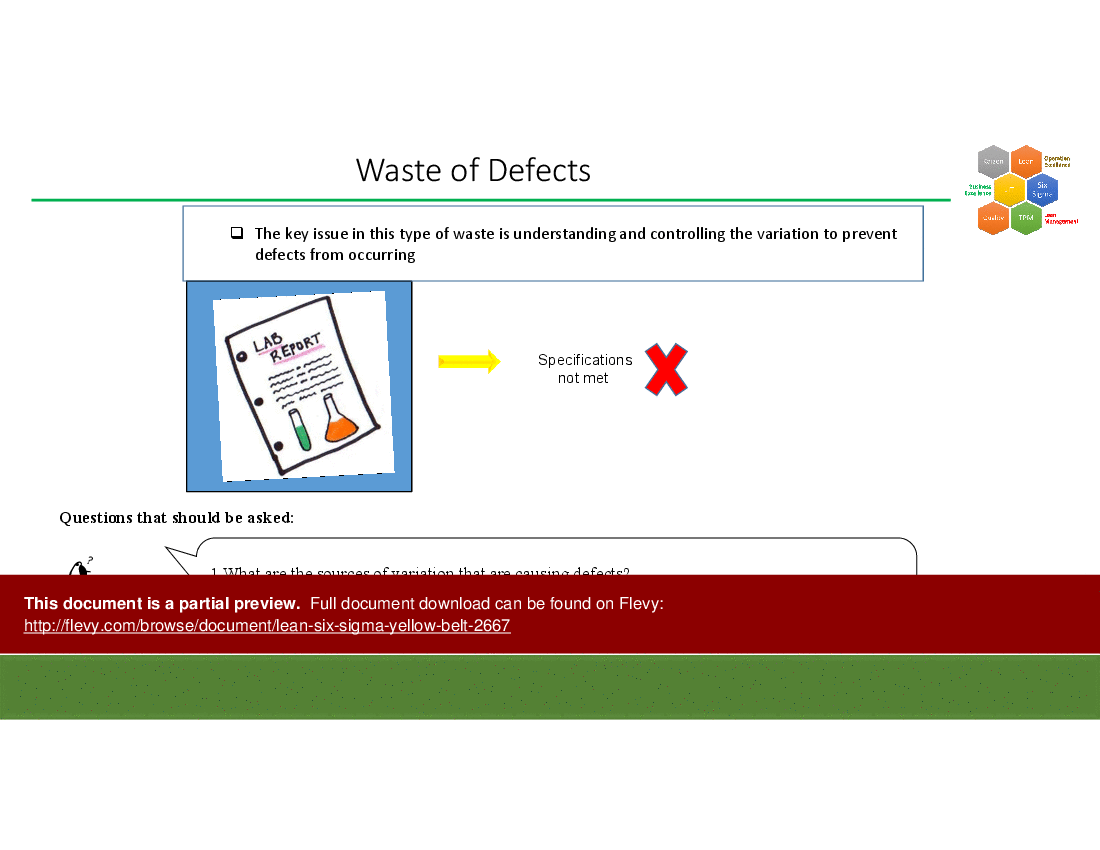
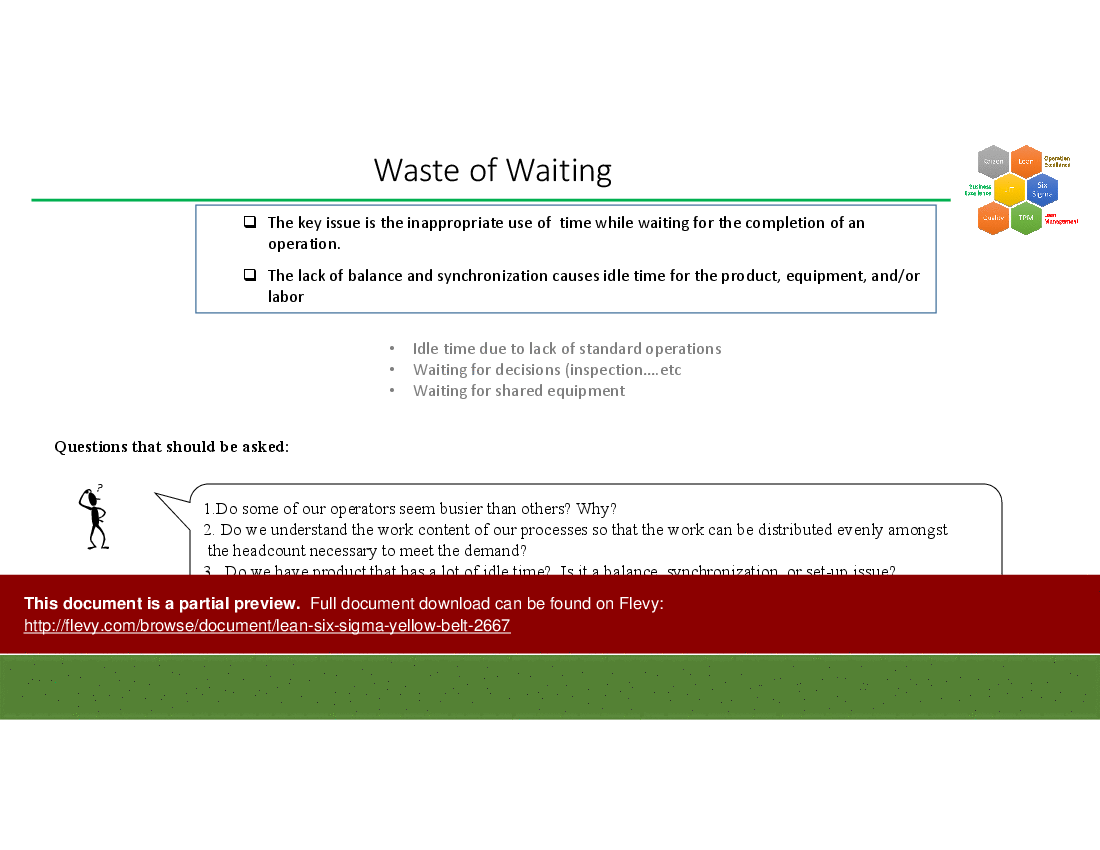
This Six Sigma Yellow Belt training program delves into the core principles of Lean, emphasizing the importance of eliminating waste and optimizing processes. The training includes a detailed exploration of the seven types of waste, such as defects and waiting, providing actionable insights to enhance operational efficiency. Participants will learn to identify value-added activities and streamline workflows to meet customer demands effectively.

The course also covers essential statistical concepts, including measures of central tendency and variation, equipping participants with the skills to analyze data and make informed decisions. Through practical exercises and real-world examples, students will gain a solid understanding of how to apply statistical tools to improve process performance. The DMAIC methodology is thoroughly explained, guiding participants through the stages of Define, Measure, Analyze, Improve, and Control to ensure sustainable improvements.

Understanding customer needs and translating them into critical-to-quality (CTQ) characteristics is a key focus of this training. The program teaches how to collect and interpret the Voice of the Customer (VOC) to align processes with customer expectations. By the end of the training, participants will be well-prepared to contribute to their organization's continuous improvement initiatives, driving higher quality and customer satisfaction.

Got a question about the product? Email us at support@flevy.com or ask the author directly by using the "Ask the Author a Question" form. If you cannot view the preview above this document description, go here to view the large preview instead.

MARCUS OVERVIEW

This synopsis was written by Marcus [?] based on the analysis of the full 73-slide presentation.


Executive Summary
The Six Sigma Yellow Belt Training presentation is designed to equip participants with foundational knowledge of Lean and Six Sigma methodologies. This training material covers essential concepts, practical applications, and certification preparation, enabling attendees to contribute effectively to process improvement initiatives. By utilizing expert slides and real-world project examples, this deck prepares individuals to recognize waste, enhance productivity, and foster a culture of continuous improvement within their organizations.

Who This Is For and When to Use
•  Operations managers seeking to implement Lean and Six Sigma principles
•  Quality assurance teams focused on reducing defects and improving processes
•  Project managers leading process improvement initiatives
•  Employees involved in continuous improvement efforts
•  Consultants advising organizations on operational excellence

Best-fit moments to use this deck:
•  During onboarding sessions for new employees in operational roles
•  As part of a training program for teams involved in process improvement
•  In workshops aimed at preparing for Six Sigma certification
•  When initiating Lean transformation projects within an organization

Learning Objectives
•  Define Lean and Six Sigma principles and their importance in operational excellence
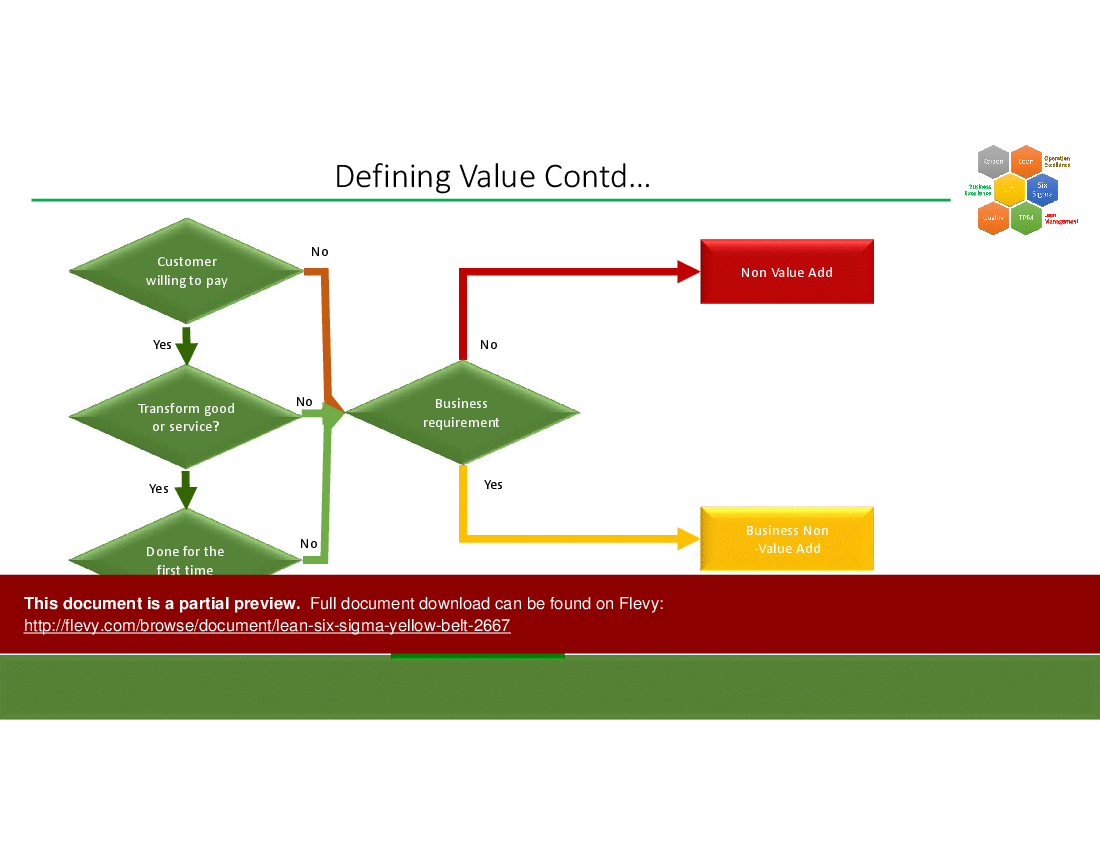
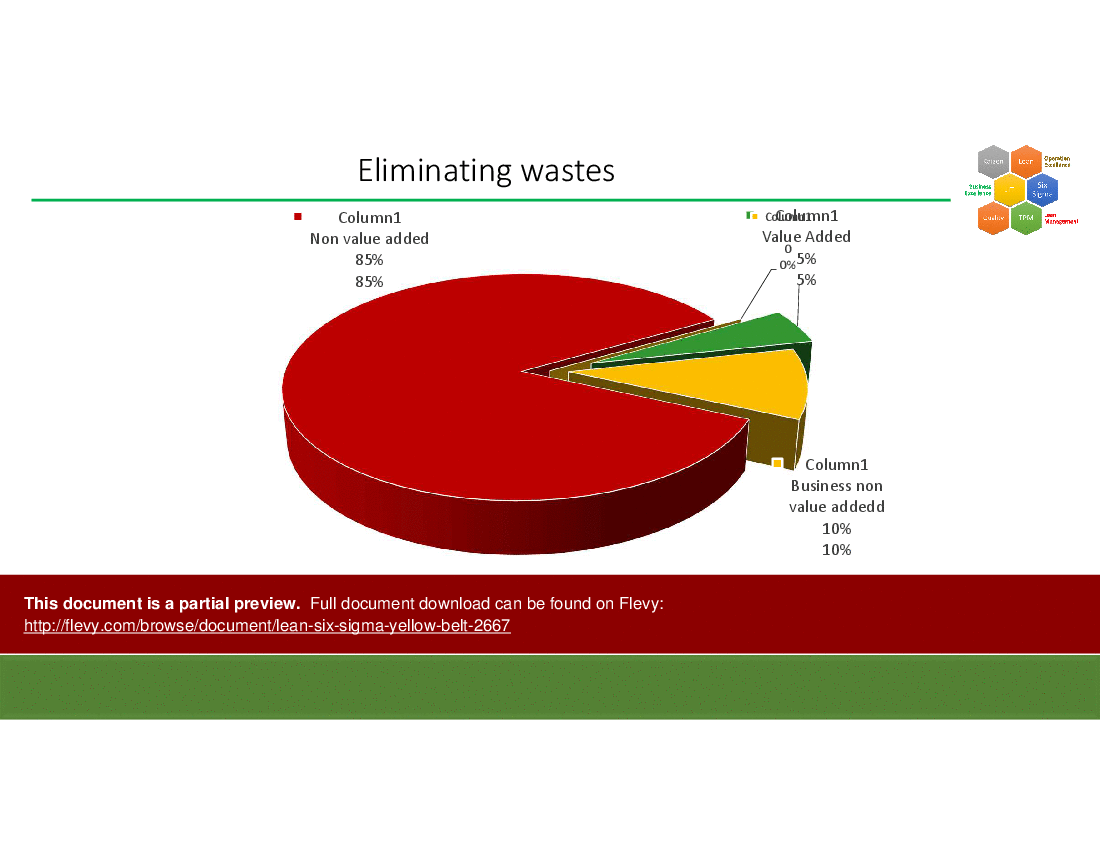
•  Identify and eliminate non-value-added activities in processes
•  Apply the DMAIC framework to solve process-related issues
•  Understand and measure key performance indicators related to quality and efficiency
•  Foster a culture of continuous improvement among team members
•  Utilize statistical tools to analyze data and drive decision-making

Table of Contents
•  Introduction to Lean and Six Sigma (page 3)
•  History of Lean (page 5)
•  Lean Principles (page 10)
•  Understanding Value (page 15)
•  The Seven Wastes of Lean (page 20)
•  DMAIC Framework (page 25)
•  Statistical Tools for Six Sigma (page 30)
•  Data Collection Exercises (page 35)
•  Conclusion and Next Steps (page 40)

Primary Topics Covered
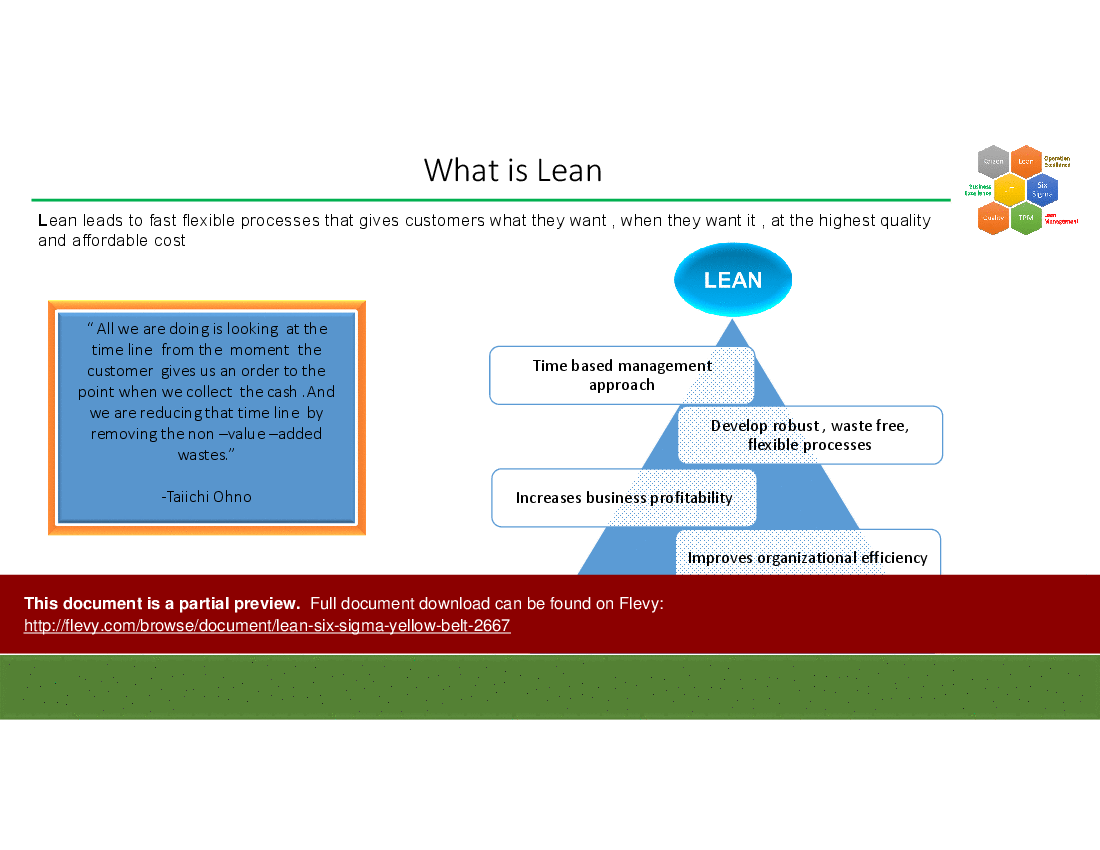
•  Lean Principles - Lean focuses on eliminating waste and enhancing value for customers through streamlined processes.
•  Six Sigma Methodology - Six Sigma employs a data-driven approach to reduce defects and improve quality, aiming for near-perfect processes.
•  DMAIC Framework - The Define, Measure, Analyze, Improve, Control framework provides a structured approach to problem-solving in process improvement.
•  Value Stream Mapping - This tool helps visualize the flow of materials and information to identify waste and areas for improvement.
•  Statistical Analysis - Basic statistics are used to measure process performance and identify areas for enhancement.
•  Waste Identification - Understanding the 7 types of waste helps organizations focus on eliminating non-value-added activities.

Deliverables, Templates, and Tools
•  Value stream mapping template for visualizing process flows
•  DMAIC project charter template for structured problem-solving
•  Data collection sheets for tracking process performance
•  Statistical analysis tools for measuring process variations
•  Training materials for Lean and Six Sigma concepts
•  Checklist for identifying and eliminating waste

Slide Highlights
•  Overview of Lean principles and their historical context
•  Visual representation of the 7 wastes of Lean
•  Detailed explanation of the DMAIC framework with practical examples
•  Statistical tools and their applications in process improvement
•  Data collection exercises designed to reinforce learning

Potential Workshop Agenda
Introduction to Lean and Six Sigma (30 minutes)
•  Overview of Lean and Six Sigma principles
•  Discussion on the importance of operational excellence

Understanding Value and Waste (60 minutes)
•  Define value from the customer's perspective
•  Identify and discuss the 7 wastes of Lean

DMAIC Framework Workshop (90 minutes)
•  Break down each phase of the DMAIC process
•  Group activity to apply DMAIC to a real-world scenario

Statistical Tools and Data Collection (60 minutes)
•  Introduction to basic statistical concepts
•  Hands-on exercise in data collection and analysis

Customization Guidance
•  Tailor the training content to reflect specific organizational processes and terminology
•  Adjust examples and case studies to align with industry-specific challenges
•  Incorporate company-specific performance metrics for relevance

Secondary Topics Covered
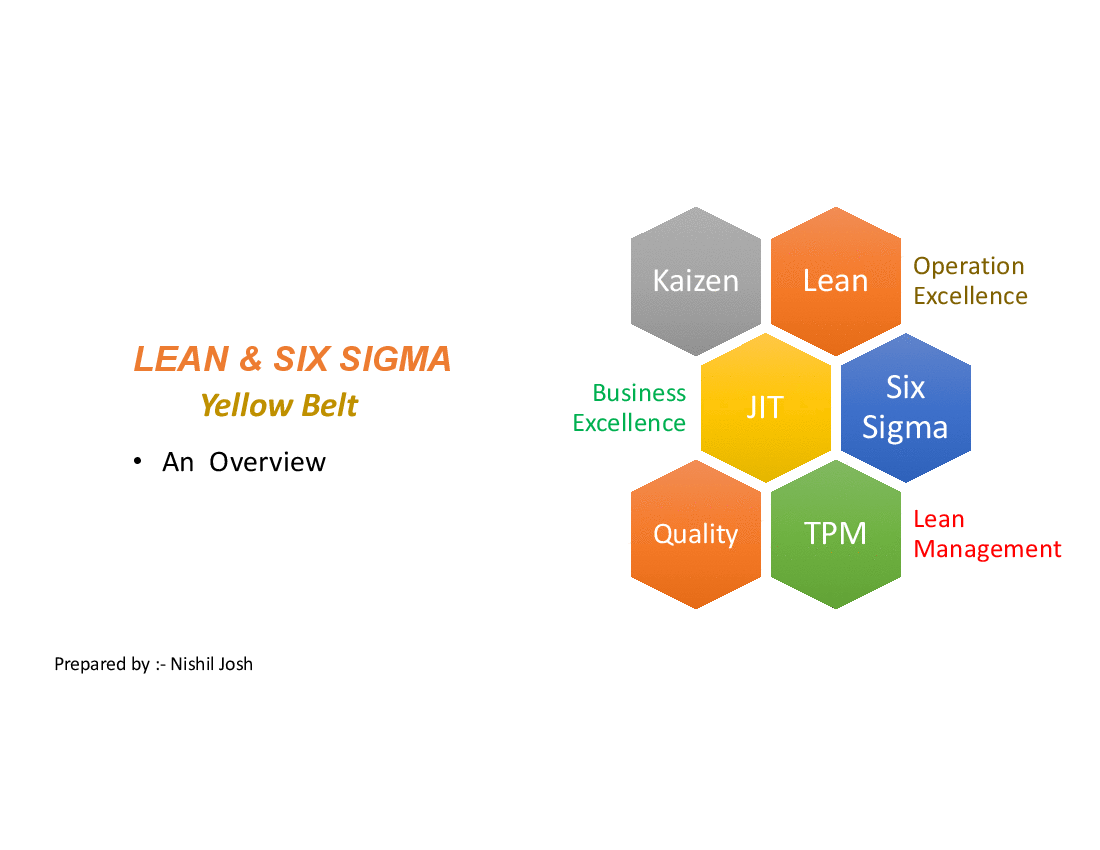
•  Kaizen and its role in continuous improvement
•  Just-in-Time (JIT) principles and their application
•  Total Productive Maintenance (TPM) as a complementary approach
•  The relationship between Lean and Six Sigma methodologies

FAQ
What is the purpose of Six Sigma?
Six Sigma aims to improve process quality by identifying and eliminating defects, striving for near-perfect performance.

How does Lean differ from Six Sigma?
Lean focuses on eliminating waste to enhance process flow, while Six Sigma emphasizes reducing variation and improving quality through data analysis.

What is the DMAIC framework?
DMAIC stands for Define, Measure, Analyze, Improve, Control, and is a structured approach to problem-solving in process improvement initiatives.

How can I apply Lean principles in my organization?
Start by mapping your processes, identifying waste, and implementing continuous improvement initiatives based on Lean principles.

What are the 7 wastes of Lean?
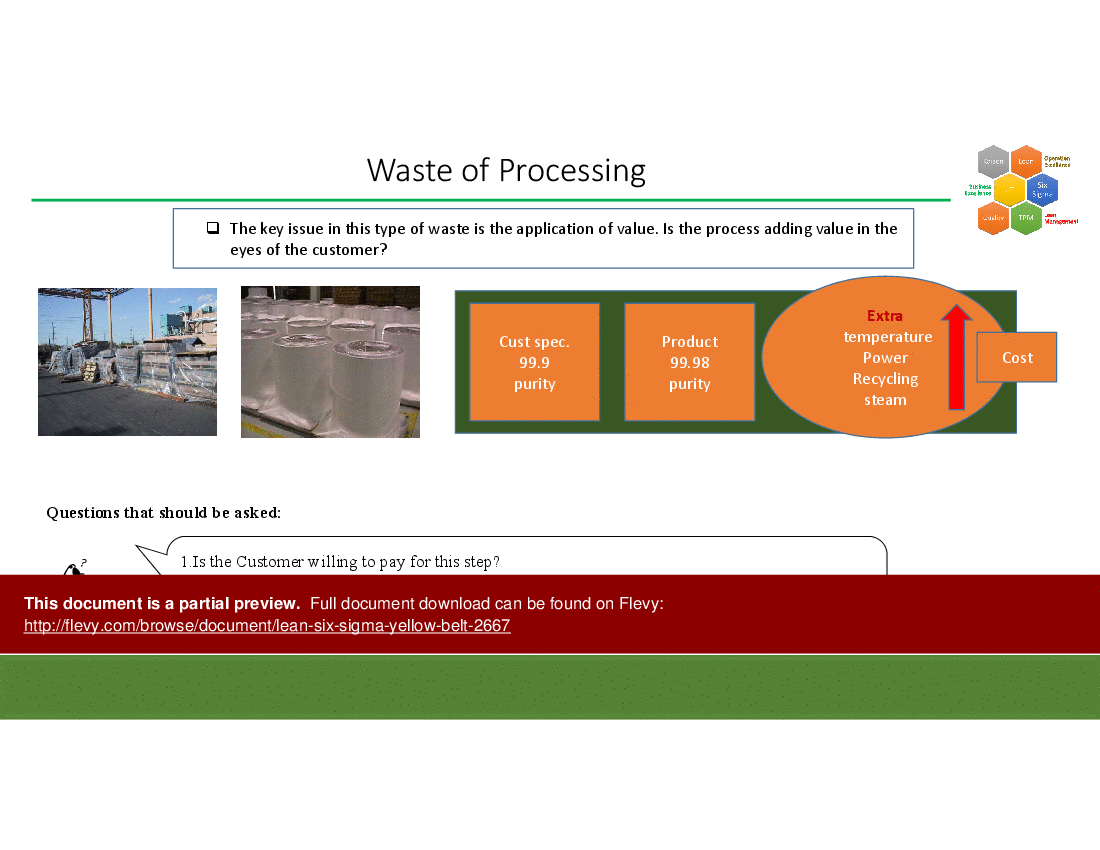
The 7 wastes include defects, overproduction, transportation, waiting, inventory, motion, and processing.

What statistical tools are used in Six Sigma?
Common tools include control charts, Pareto analysis, and root cause analysis to identify and address process variations.

How can I measure the success of Lean and Six Sigma initiatives?
Success can be measured through key performance indicators such as defect rates, cycle times, and customer satisfaction scores.

What is a value stream map?
A value stream map is a visual tool used to analyze and improve the flow of materials and information in a process.

Glossary
•  Lean - A methodology focused on eliminating waste and enhancing value.
•  Six Sigma - A data-driven approach to improving quality by reducing defects.
•  DMAIC - A structured problem-solving framework: Define, Measure, Analyze, Improve, Control.
•  Value Stream Mapping - A tool for visualizing and analyzing process flows.
•  Kaizen - Continuous improvement through small, incremental changes.
•  Just-in-Time (JIT) - A strategy aimed at reducing inventory and increasing efficiency.
•  Total Productive Maintenance (TPM) - A holistic approach to equipment maintenance that maximizes productivity.
•  Defects - Any instance where a product or service fails to meet quality standards.
•  Waste - Activities that do not add value to the customer or the process.
•  Cycle Time - The total time from the beginning to the end of a process.
•  Takt Time - The maximum allowable time to produce a product to meet customer demand.
•  Control Chart - A statistical tool used to monitor process variations over time.
•  Root Cause Analysis - A method for identifying the underlying causes of problems.
•  Performance Metrics - Measurements used to assess the effectiveness of a process or initiative.
•  Continuous Improvement - Ongoing efforts to enhance products, services, or processes.
•  Process Mapping - A visual representation of the steps involved in a process.
•  Statistical Analysis - The process of collecting and analyzing data to identify trends and patterns.
•  Customer Satisfaction - A measure of how products or services meet or exceed customer expectations.
•  Operational Excellence - The execution of the business strategy more consistently and reliably than the competition.

Source: Best Practices in Lean Six Sigma Yellow Belt PowerPoint Slides: Six Sigma Yellow Belt Training PowerPoint (PPTX) Presentation Slide Deck, Nishil Josh


$29.99

Add to Cart
  

ABOUT THE AUTHOR

Author: Nishil Josh
Additional documents from author: 23

I am a Business Excellence Professional with over 25 years of experience in Manufacturing Operations, Quality Assurance & Improvement, and Resource Management across various industry sectors. Throughout my career, I have specialized in managing production activities, optimizing processes, and implementing best practices to enhance operational efficiency and productivity.

My expertise includes ... [read more]

Ask the Author a Question

You must be logged in to contact the author.

Click here to log in Click here register

Did you know?
The average daily rate of a McKinsey consultant is $6,625 (not including expenses). The average price of a Flevy document is $65.
Bundle and save! You can save up to % with bundles!

View bundle(s)


Trusted by over 10,000+ Client Organizations
Since 2012, we have provided business templates to over 10,000 businesses and organizations of all sizes, from startups and small businesses to the Fortune 100, in over 130 countries.
AT&T GE Cisco Intel IBM Coke Dell Toyota HP Nike Samsung Microsoft Astrazeneca JP Morgan KPMG Walgreens Walmart 3M Kaiser Oracle SAP Google E&Y Volvo Bosch Merck Fedex Shell Amgen Eli Lilly Roche AIG Abbott Amazon PwC T-Mobile Broadcom Bayer Pearson Titleist ConEd Pfizer NTT Data Schwab


Read Customer Testimonials

 
"FlevyPro provides business frameworks from many of the global giants in management consulting that allow you to provide best in class solutions for your clients."

– David Harris, Managing Director at Futures Strategy
 
"As a young consulting firm, requests for input from clients vary and it's sometimes impossible to provide expert solutions across a broad spectrum of requirements. That was before I discovered Flevy.com.

Through subscription to this invaluable site of a plethora of topics that are key and crucial to consulting, I "

– Nishi Singh, Strategist and MD at NSP Consultants
 
"Flevy.com has proven to be an invaluable resource library to our Independent Management Consultancy, supporting and enabling us to better serve our enterprise clients.

The value derived from our [FlevyPro] subscription in terms of the business it has helped to gain far exceeds the investment made, making a subscription a no-brainer for any growing consultancy – or in-house strategy team."

– Dean Carlton, Chief Transformation Officer, Global Village Transformations Pty Ltd.
 
"[Flevy] produces some great work that has been/continues to be of immense help not only to myself, but as I seek to provide professional services to my clients, it gives me a large "tool box" of resources that are critical to provide them with the quality of service and outcomes they are expecting."

– Royston Knowles, Executive with 50+ Years of Board Level Experience
 
"I have used FlevyPro for several business applications. It is a great complement to working with expensive consultants. The quality and effectiveness of the tools are of the highest standards."

– Moritz Bernhoerster, Global Sourcing Director at Fortune 500
 
"As a niche strategic consulting firm, Flevy and FlevyPro frameworks and documents are an on-going reference to help us structure our findings and recommendations to our clients as well as improve their clarity, strength, and visual power. For us, it is an invaluable resource to increase our impact and value."

– David Coloma, Consulting Area Manager at Cynertia Consulting
 
"As a consultant requiring up to date and professional material that will be of value and use to my clients, I find Flevy a very reliable resource.

The variety and quality of material available through Flevy offers a very useful and commanding source for information. Using Flevy saves me time, enhances my expertise and ends up being a good decision."

– Dennis Gershowitz, Principal at DG Associates
 
"My FlevyPro subscription provides me with the most popular frameworks and decks in demand in today’s market. They not only augment my existing consulting and coaching offerings and delivery, but also keep me abreast of the latest trends, inspire new products and service offerings for my practice, and educate me "

– Bill Branson, Founder at Strategic Business Architects


Save with Bundles

This document is available as part of the following discounted bundle(s):

Save %!
Lean Management Training Course

This bundle contains 6 total documents. See all the documents to the right.

$50.00


Add Bundle & Save


Customers Also Bought These Documents


Customers Also Like These Documents

Explore Related Management Topics


Your Recently Viewed Documents
Receive our FREE presentation on Operational Excellence

This 50-slide presentation provides a high-level introduction to the 4 Building Blocks of Operational Excellence. Achieving OpEx requires the implementation of a Business Execution System that integrates these 4 building blocks.









